Autocad R13 R13 Autodesk Download Download Free Software
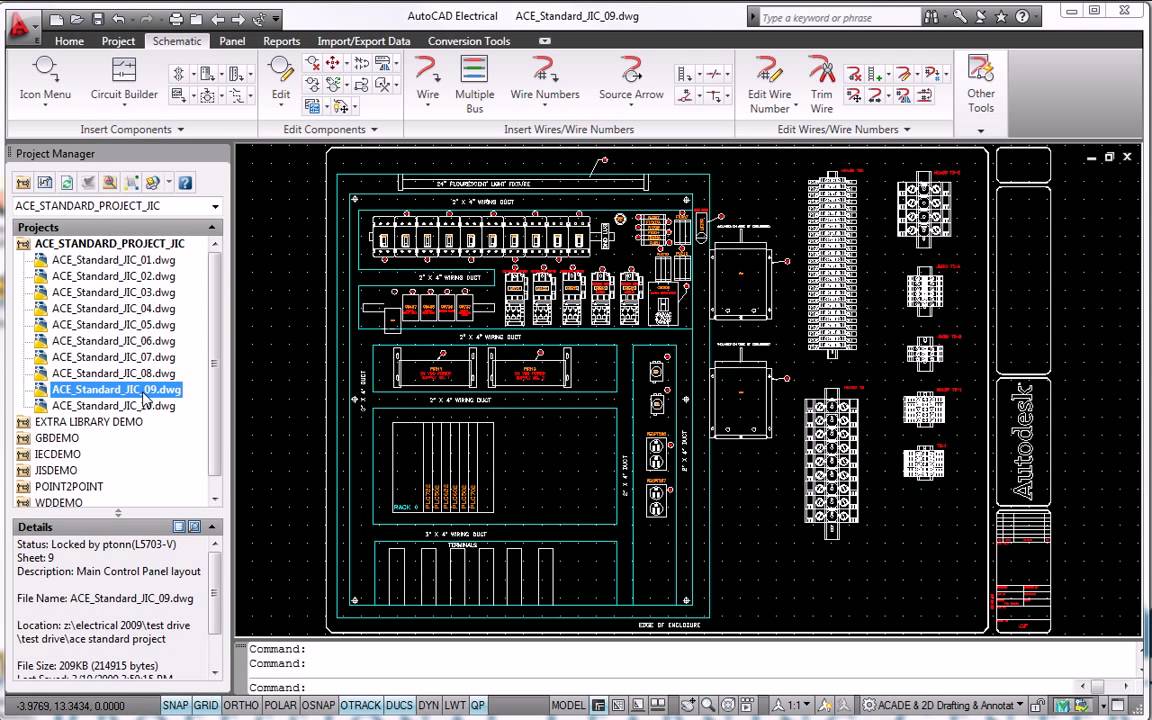
A longtime standard excels in a new environment Autodesk's AutoCAD is the granddaddy of all drafting programs. The current incarnation, release 13c4 (R13), takes more than 200MB on a CD-ROM and ships with nearly 15 pounds of documentation (with more available only online at The initial release of AutoCAD R13 included versions for UNIX, MS-DOS, and Windows 3.X. A few months later, Autodesk added a Windows NT version. I set out to discover how well NT and AutoCAD work together. The Application AutoCAD is a sophisticated design and drafting package for developing complex drawings. Shows a drawing created using AutoCAD.
AutoCAD is a commercial computer-aided design (CAD) and drafting software application. As Autodesk's flagship product, by March 1986 AutoCAD had become the. Several vendors provide online conversions for free such as Cometdocs. The program is available via download at no cost from the App Store (iOS),.
The program supports 2D and 3D drawing and rendering, and sophisticated features such as solid modeling. Whereas a 3D rendering typically involves the cosmetics of a 3D object's surface, true solid modeling includes the attributes, such as mass and density, of real 3D objects. Unlike drawing files other programs create, an AutoCAD drawing is a full database of information that completely describes the objects ('entities,' in AutoCAD terms) you draw.
In fact, AutoCAD lets you link drawings to external databases so you can use drawings, for example, to generate a bill of materials. You can even use the information in an AutoCAD drawing to directly control automated machining tools. Cyber tank klyuch game. AutoCAD has grown into its own industry--the AutoCAD Resource Guide that ships with the product has more than 300 pages of third-party add-ons, enhancements, and of course, T-shirts. Some of these add-ons, such as a calculator, provide simple features and others, such as 3D wire-frame unfolding and finite element analysis, are more sophisticated.
You can bet that if a task has anything, even remotely, to do with CAD, someone has created an add-on for it in AutoCAD. System Requirements Everything about AutoCAD is heavy duty, which means if you want to seriously work with this program, you need a serious workstation. AutoCAD for NT runs on the Intel and Alpha platforms. Autodesk recommends at least 32MB of RAM; I found 40MB to be a comfortable minimum when working with most drawings.
However, you might need 48MB or more for large complex drawings--particularly for rendering. A typical install requires 50MB of disk space and a generous swap file; fortunately disk space is cheap and plentiful. And don't even think about running AutoCAD on anything less than a fast Pentium.
I didn't have time to test the program with a Pentium Pro, but as a pure 32-bit application that extensively uses floating point arithmetic, AutoCAD must work particularly well on this new processor. Installation Installing AutoCAD is easy. The program uses no external protection devices for the single-user US version. However, you'll need to dial a toll-free number to get an authorization code for each copy (this is pretty painless).
The first time you run AutoCAD, you must go through a reasonably straightforward text-based configuration operation. Running on NT Once installed, AutoCAD ran flawlessly under NT with a noticeable advantage over previous versions: With the R13 release under NT, you can now open multiple AutoCAD sessions. Previously, AutoCAD ran only one session at a time: Windows 3.X does not support the multiple instance functionality.
Because AutoCAD is a single document interface (SDI) application, the only way to open a second drawing is to open another AutoCAD session. So being able to run more than one session at a time is vital if you want to cut and paste from one drawing to another. Running two AutoCAD instances, however, requires patience or lots of RAM. I recommend an extra 8MB of RAM for each additional instance if you want to do a lot of cut and paste operations. Just for fun, I ran half a dozen instances of AutoCAD; NT did this with no trouble.
Each instance grabbed an extra 8MB to 10MB of swap-file space. Switching among the instances took between 3 and 4 seconds (including time to redraw) on my P90 system, which seemed reasonable. When I ran the same test under Windows 95, I couldn't get beyond the third instance without running into difficulties. The system either crashed or displayed a blank dialog (always a sign of resource problems). Although AutoCAD runs well under NT, the program is not particularly well integrated with some advanced features of NT.