Baldwin Ode Banjo Serial Numbers
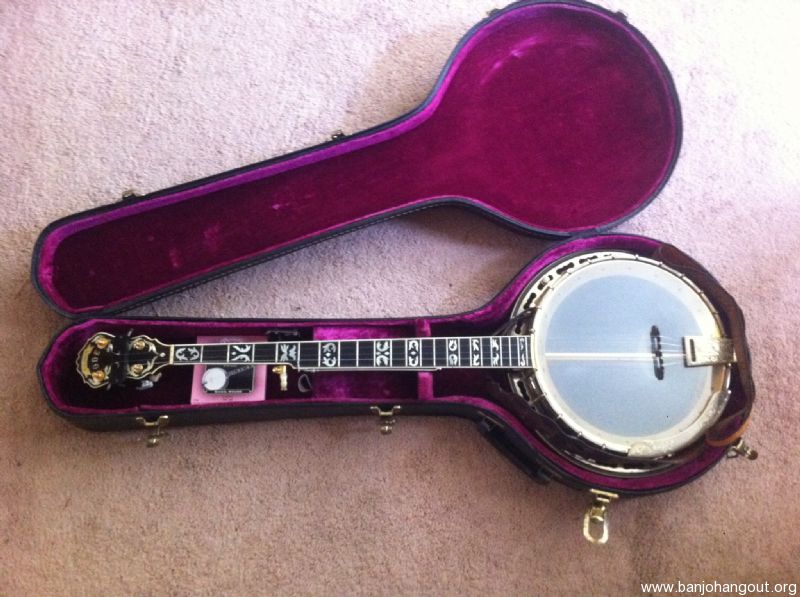
Here's (an ODE A-style for sale by Campbell's Music Service. Dealer reiterates what I've heard, that ODE mandolins were made by Robt. Givens, or at least that he designed them. ODE was a banjo maker based in Boulder CO that manufactured a line of banjos with cast aluminum shells.* I believe they sold ODE brand banjos through direct sale, and Muse brand through dealers. I still own a Muse Style 2 5-string I purchased at the Denver Folklore Center in 1965 with my US Army separation pay. At that point ODE was reorganizing or going out of business; I think someone else took over the nameplate, and that the mandolins were added during the '70's. Some of the old ODE luthiers (does one call a banjo maker a 'luthier'?
Guess so.) started up the Ome banjo company, still in Boulder I believe; they make some extremely fancy 5-string, tenor and plectrum banjos. Don't think the ODE mandolins were manufactured in great numbers, but if Givens had anything to do with their production, they're probably high-class instruments.
* The Stew-Mac 'kit' banjos use, or used, a cast aluminum shell based on the ODE design. However, the Stew-Macs have an integral cast aluminum arch-top tone ring, while the Muse I own has a separate brass arch-top tone ring -- a higher-end design, IMHO.
Scene by making the ODE banjo, one of the favorite instruments of the folk revival era. Instrument, and Baldwin ended buying ODE while Salstrom was later purchased. I should have checked the serial number of that one I just saw. Retail musical instrument store specializing in new, used & vintage instruments and accessories.
I pulled together some information on Bob Givens, just for my own use, and the following excerpt is a portion of that: While Givens was building mandolins in California, Chuck Ogsbury was making banjos in Colorado. But, by 1966, Ogsbury had sold his banjo company to Baldwin, the large company known primarily for pianos that also owned Gretsch instruments. Biss klyuchi na 85 gradus live.
As part of the sales contract, Ogsbury agreed not to build instruments for five years that would compete with the ones whose production Baldwin would be taking over. After the deal went through, Baldwin saw little reason to keep using the Ode name. Baldwin originally badged their instruments (primarily banjos) with their company name but discovered that it lacked the name recognition that Ode had acquired among banjo players. So, around 1971, they began double-naming instruments using both “Baldwin” and “Ode” designations. By 1977, they had switched to the Ode moniker exclusively. Baldwin farmed out the manufacture of their banjo components and legendary dobro flatpicker and luthier Tut Taylor, who was building banjos and resophonic guitars, was one of their contractors. Download prince sign o the times remastered rarest.
Givens, meanwhile, had left home and traveled east to Nashville; he and Tut became partners. They bought the old Grammar Guitar Company and began doing work for Baldwin, making instruments under the Ode name and also producing some instruments of their own. With Bob Givens available, it made sense for Baldwin to have him make some Ode mandolins, which they did. Okay, so, Tut Taylor and Bob Givens were building Ode instruments for the Gretsch Division of the Baldwin Music Co. In the old Grammar Guitar factory.
Company affiliations got pretty confusing and for some instruments it was hard to figure out exactly who had made them. For example, some mandolins bearing the Ode name on the headstock had Givens engraved on the tailpiece, and labels reading, THE GIVENS MANDOLIN Manufactured By TUT TAYLOR MUSIC, INC. Nashville, Tenn.-----Distributed By Gretsch--Cincinnati, Ohio Clearly, R. Givens was involved in making these instruments, but in his spare time, as I mentioned, he also was producing special-order, custom-made instruments bearing his own name.
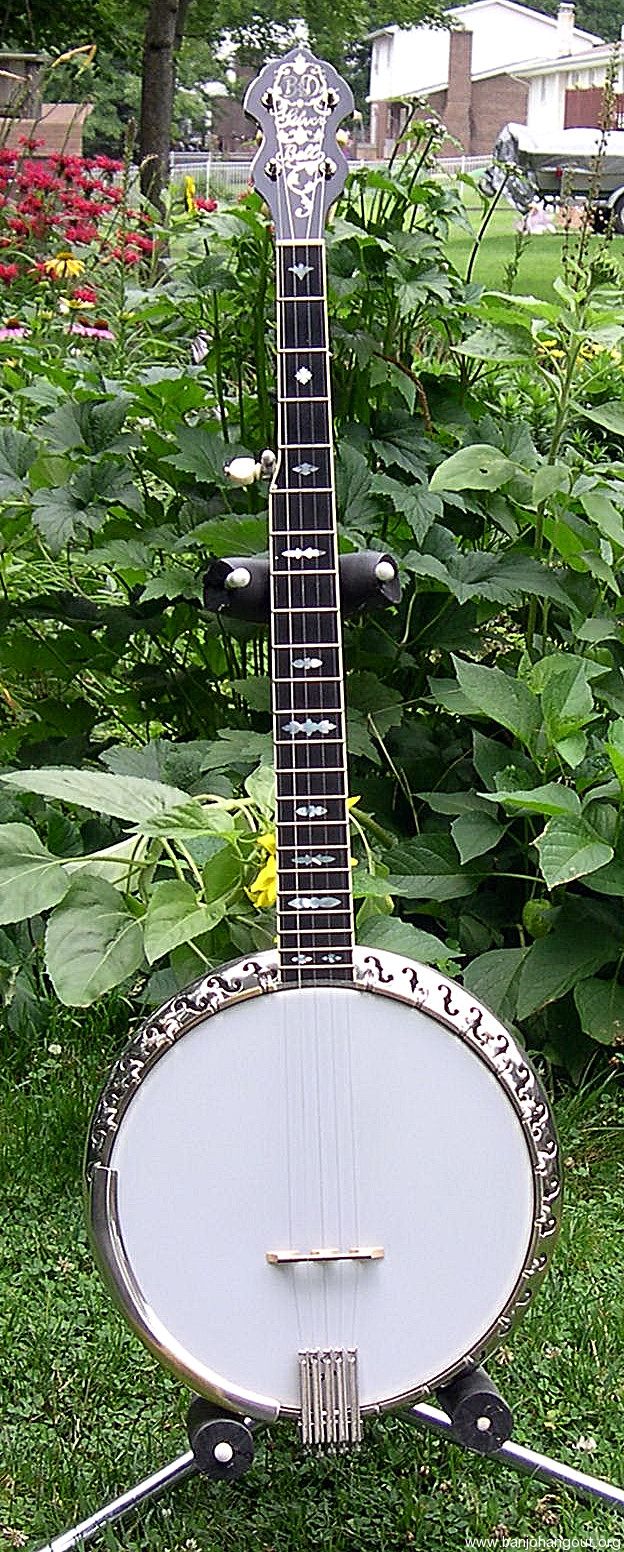
Meanwhile, in Colorado, Ogsbury’s non-competition agreement with Baldwin had expired in 1971 and he began to make banjos again, this time under the Ome name, as he no longer owned the rights to “Ode.” A few years after Ome’s start-up, the company followed Ode’s example and flirted with the idea of making mandolins. They hired a guy from Connecticut, name Mike Kemnitzer to design two mandolins, an A and an F, and to build a prototype of each. Back at Ome, the company wasn’t all that sure about the mandolin idea. Besides, Mike Kemnitzer had decided to produce his own mandolin line under the name, “Nugget.” Like the Givens mandolins, these soon became some of the most sought-after new instruments available.
As I said, I gathered this information for my own edification. I think it's reasonably accurate but can't be 100% sure that I have all the facts straight. I'd encourage others with more information to correct any errors. I think there were some unfinished Ode mandolin kits that floated around in the 1970s, too.
Dunno if we're thinking about the same thing, but there used to always be a classified ad in the back of the old Pickin' magazine reading; 'Unfinished A model mandolins $150. Back in the seventies, a friend bought a bunch of 'em and I ended up with one. Maple back and sides, wide grain spruce top, and (the strangest feature) an integral mahogany neck/neck block with the ribs 'let into' the block as is done in classical gtr construction. Not gonna happen on one of these! Mine came with just the yellow stain rubbed on. I have played the sh#t outta this mandolin since then and it just won't quit! Cuts through in an acoustic session and mics up real well.