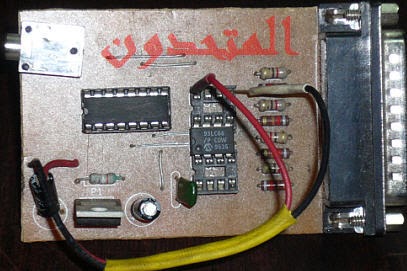
Serial Eeprom Programmer 93c56
Smart school tutor serial key. With over 50,000 modules mapped to school curriculum, the software is best tool to secure high grades in the school examination. How it works? The tutor consists of three major components:- K-12 Digital Content ExamGuru Offline/Online LMS Tutor pack consists k-12 digital content, which is a complete 3D/2D animation based education content, localized as per school curriculum.
Today we're going to learn how to read and write serial EEPROM devices using. Contoh program kerja osis. Could only be written to once using a high-voltage programming device.
Description Application: Serial memory programming in: • car electronics & automotive (reprogramming modules, radio-code, immobilizers, gps navigations, mileage correction and other modules with serial EEPROM and/or FLASH memories), • computer and notebook service (data recovery, reflashing, upgrading and programming BIOS chips in motherboards, copier & fax machines, printers, hdd & ssd sata drives etc. ), • network service (programming and cloning optical and ethernet SFP & SFP+ modules), • RTV/AGD maintaining or repairing (TV, digital cameras, tv tuners etc.), • and many other devices equipped with serial IIC / SPI / Microwire EEPROM and SPI FLASH chips. Main features: •.
Serial EEPROM Serial EEPROM (93C46 / 93CS46) Routines Don't like reading docs, why not just? Contents • • • • • • Serial EEPROMs are small Electronically Erasable Programmable Read Only Memory chips. These devices are usually used to store user configurable parameters and device serial numbers. They use a serial bus interface, which allows them to be packaged in inexpensive 8 pin packages. To you, the 8051 system designer, these little chips offer a nifty way to store a small amount of data in non-volatile memory, using only a few of the port pins, and without raising the system's cost much. They are usually specified to retain the data for 10 years and to endure 100,000 write operations before failure.
They only require a 5 volt power supply (some 3V only versions exist too). Because these chips use a serial interface, they can not be read quickly enough to serve as conventional memory. In addition, a considerable length of time (milliseconds) is required to perform a write operation.
They typically hold less than 1024 bytes of memory. However, they usually cost less than $1.00 (US) for single piece quantities, making them pretty desirable memory devices for storing configuration parameters or other bits of information that should be retained when the power is lost. There are several types of Serial EEPROMs, but most of them fall into either a 2-wire or 3-wire interface category. Usually, the 3-wire devices require an addition wire (beyond the 3 for data transfer) for each chip to be used. The 2-wire interface, called I 2C or IIC or 'I squared C' uses only two wires, regardless of how many chips are attached.
I 2C is a trademard of. The three wire interfaces include SPI and Microwire, which is a trademark of. As the pressure on engineers to make products smaller has grown, semiconductor manufacturers have introduced several new interfaces, usually aimed at lower a product's size and cost. And undoubtedly many more will appear in the future. As a practical matter, the code offered below only works with the Microwire 3 Wire interface, and is specifically intended to work with the 93C46, which is a standard part available from a variety of distributors. The code below works with the 93CS46 Serial EEPROM. It can be used without much difficulty with a 93C46, by avoiding calls to the routines that manipulate the extended features of the 93CS46.